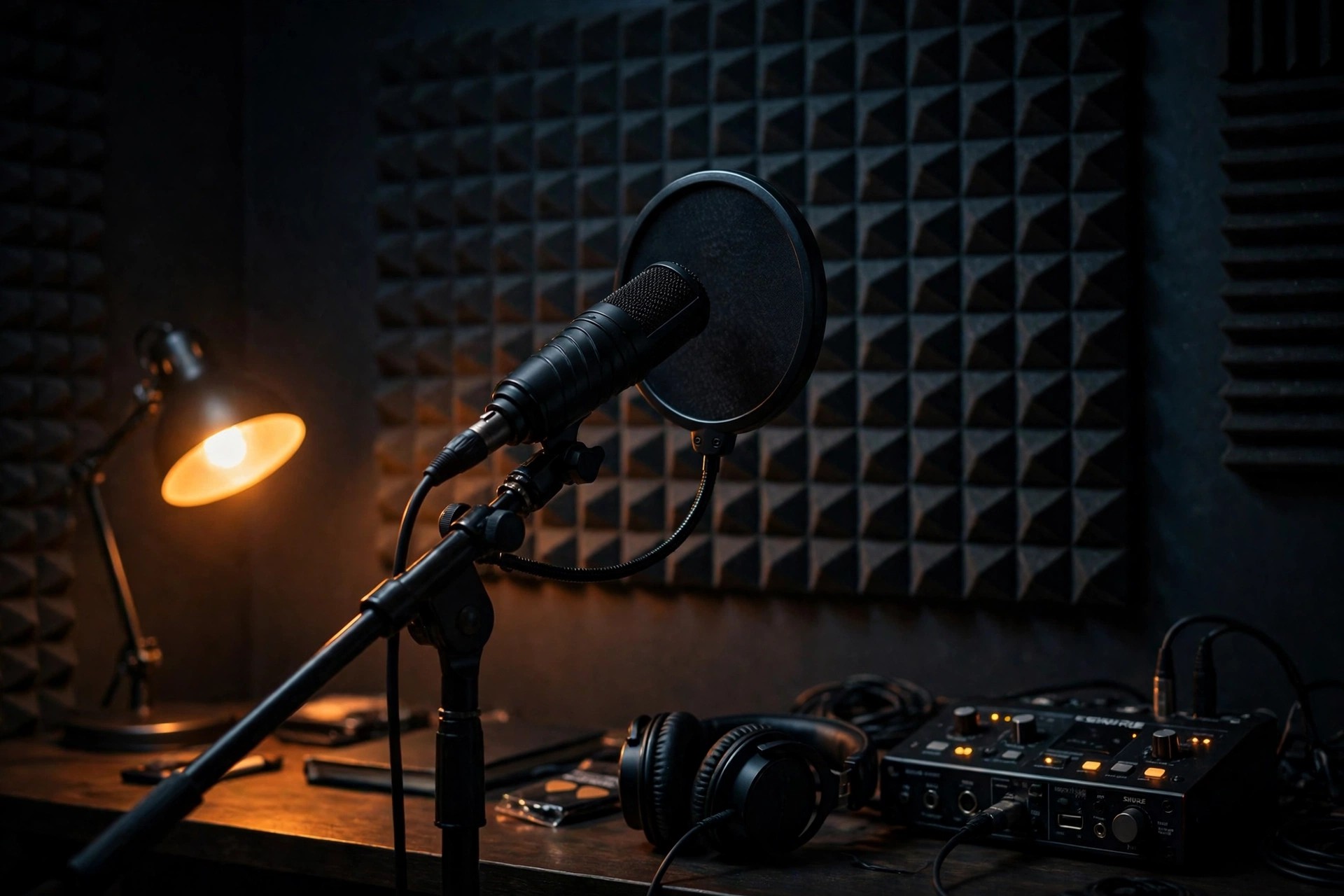
A budget vocal chain is not about buying the cheapest version of everything. It's about spending money where it actually changes the recording, and skipping the stuff that only looks like it matters.
Most home vocals don't sound bad because the mic was cheap. They sound bad because the room was loud, the level was wrong, or the mic was the wrong tool for that room. Fix those three first, and a modest chain will carry a record.
Start with the mic that fits your room
This is the decision that matters most, and it's the one people get backwards. They buy a big, sensitive condenser because that's what the studio photos show, then record in an untreated bedroom. A condenser hears everything: your voice, the AC, the ceiling fan, the fridge humming down the hall. That detail is only a plus in a quiet, treated room. Everywhere else, it's a liability you're recording at 24-bit.
In a regular bedroom, a cardioid dynamic is usually the smarter buy. It mostly hears what's right in front of it and rejects the rest of the room. The Shure SM58 is the classic example — built for close-up vocals, with a presence lift in the mids, and it will outlast everything else in your setup.
If your room is already quiet and reasonably treated, a condenser makes sense. If it's not, buy the dynamic first. You can always add a condenser later. You can't un-record room noise.
The interface: buy clean gain, not features
You need an interface with a quiet preamp, a headphone output that drives your cans properly, and drivers that don't fight your computer. That's it. Extra inputs and software bundles don't make your vocal sound better.
The Focusrite Scarlett 2i2 Gen 4 is the one I point people to at this price. Its preamps have real headroom — 69 dB of gain, which covers most mics without getting noisy — and the gain halos make level-setting obvious instead of guesswork. Clip Safe is a useful safety net, but set your levels right first and treat it as backup, not a plan.
One honest note: a dynamic like the SM58 doesn't need an inline booster with an interface like this. Save that money.
The room is gear, too — and most of it is free
Before you buy anything else, deal with the reflections the mic can hear. You don't have to treat the whole room. Treat what the mic sees: the walls to your left and right, and the wall behind you.
Thick moving blankets hung on those walls kill the short reflections that make a bedroom vocal sound like a bedroom. A packed closet with the door open works too — clothes are free absorption. Record a foot or two off a treated wall, not dead in the middle of the room, and turn off everything that hums: the AC, the fan, the monitor.
Skip the clamp-on reflection filter until the walls are handled. It helps a little with what's directly behind the mic, but nothing for the side reflections that actually smear your vocal. Blankets first, gadgets later.
Monitor on closed-back headphones
When you track vocals, your monitors go off and your headphones go on — otherwise the backing track bleeds into the mic and you're stuck with it. Closed-back headphones keep the track in your ears and out of the recording.
The Audio-Technica ATH-M50x is a safe, long-lasting pick here: closed-back, comfortable for long sessions, and honest enough that problems in a take don't hide. Don't track in earbuds or open-back headphones and wonder where the bleed came from.
Set the level for the loudest moment, not the verse
This is where budget chains quietly fall apart. Everybody records too hot because the loud version sounds better in the headphones. Then the ad-lib clips, the double clips, and the mix starts with damage.
At 24-bit, your loudest peaks should land around -12 to -6 dBFS. That's plenty of signal, and nothing ever clips. Stand where you'll actually perform, sing or rap your loudest section — the real energy, not a soundcheck mumble — and bring the gain up until those peaks sit in that range. Check the doubles separately; they're usually hotter than the lead.
Where the money actually goes
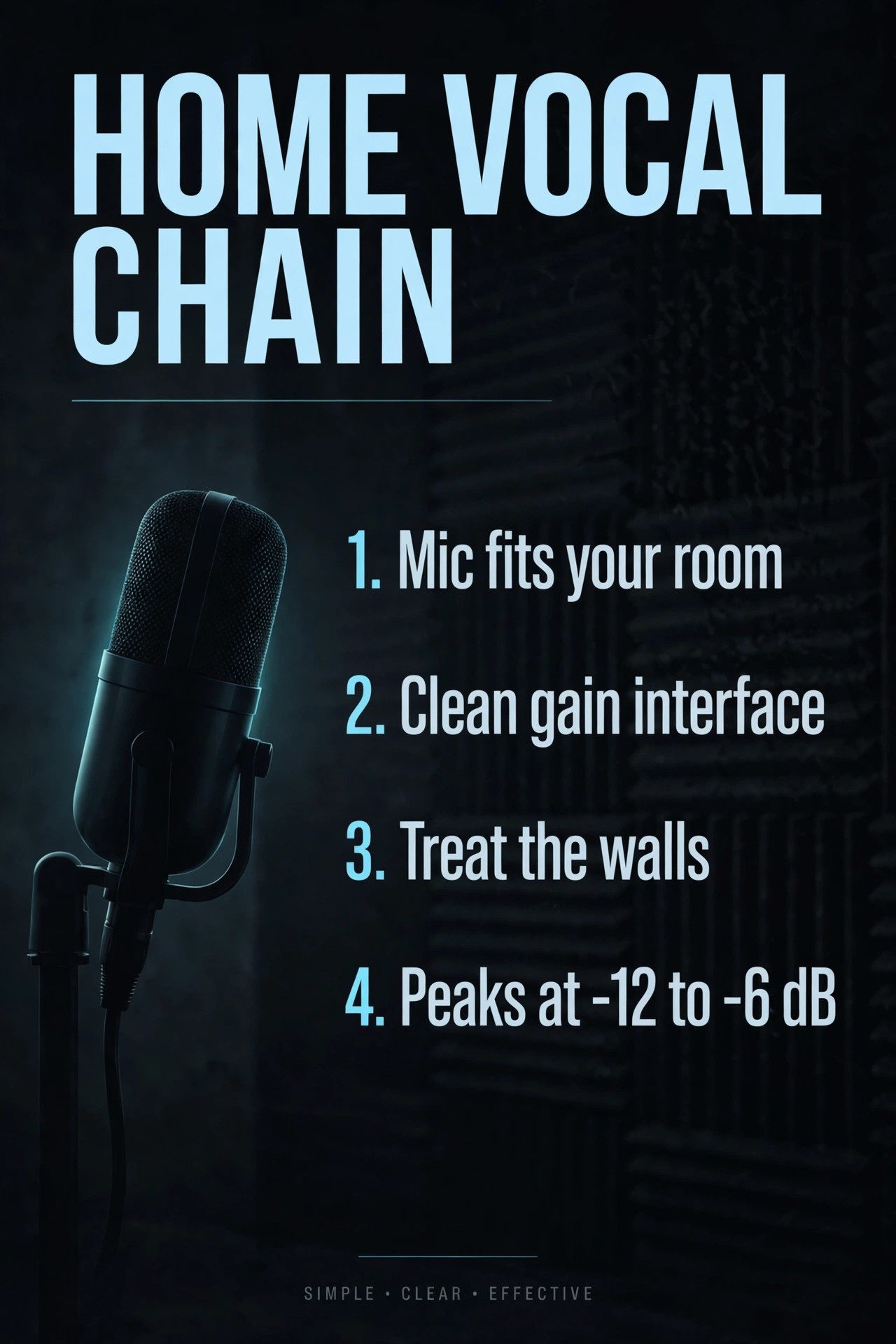
If you're building from scratch, spend in this order: a mic that suits your room, an interface with clean gain, closed-back headphones, and then room treatment you mostly already own. A pop filter and a solid stand round it out. That's a complete vocal chain.
What to skip for now: the expensive condenser in an untreated room, the outboard preamp, and any plugin bundle sold as a "vocal chain in a box." None of those fix a noisy room or a clipped take. They just make a bad recording more expensive.
Get the source right and mixing becomes cleanup instead of rescue. That's the whole game — not owning the most gear, but owning the right pieces and using them in a room that isn't fighting you.
If you've got vocals recorded and you're not sure they're clean enough to mix, send them my way. Mixing and mastering for artists is what I do — mixedbysilent.com has the details. Better to check before you mix a hundred tracks than after.